Publications
I share insights through books, magazine columns, articles.
Books
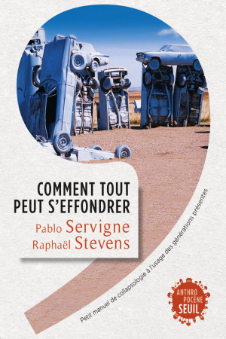
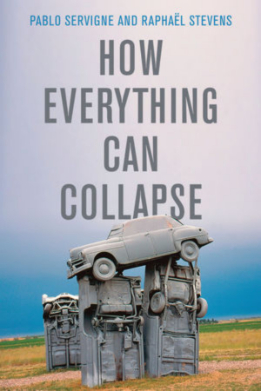
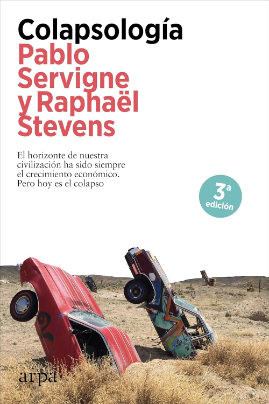
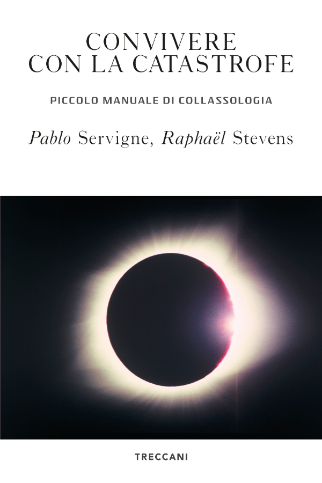
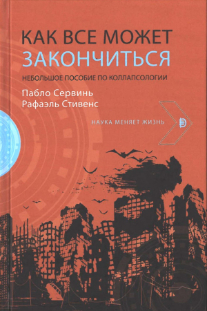
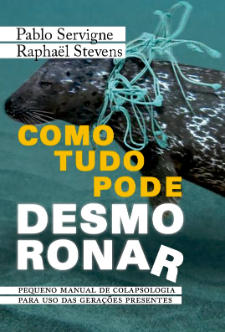
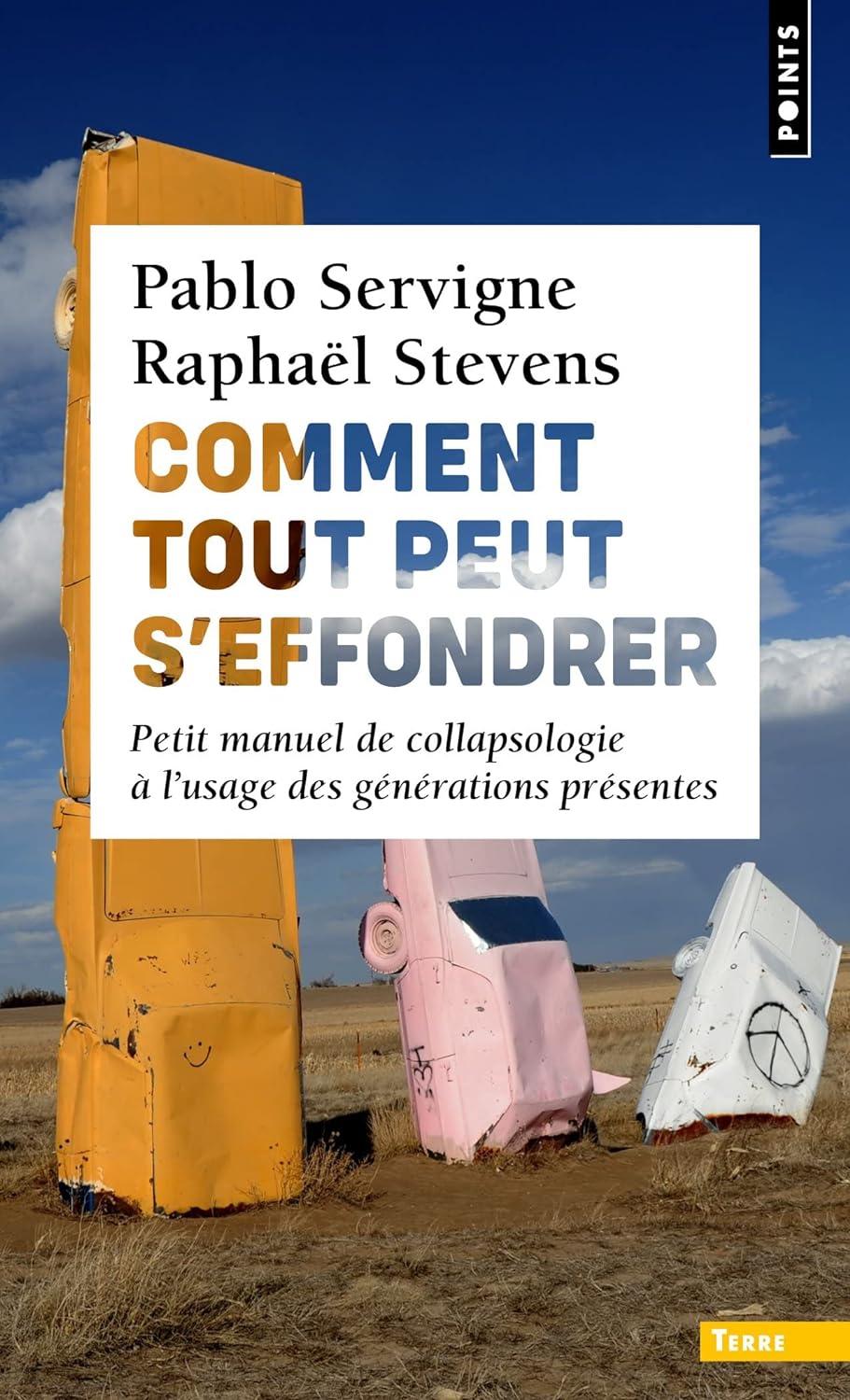
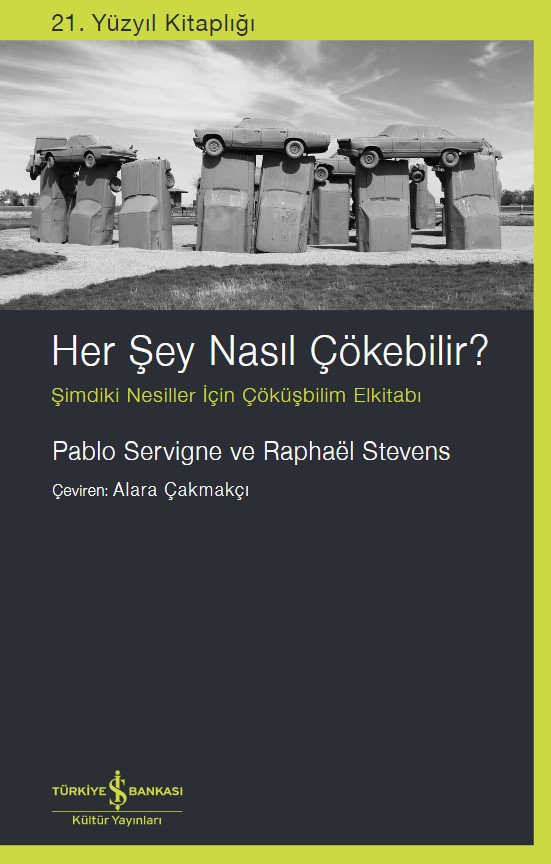
How Everything Can Collapse, 2015 (english edition, 2020). Reviews on AMZN, & Press.
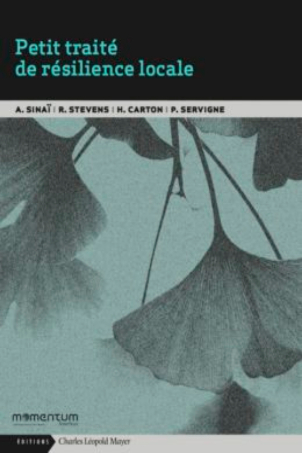
Petit traité de résilience locale, 2015. Reviews on AMZN. Free PDF/ EPUB copy in french.
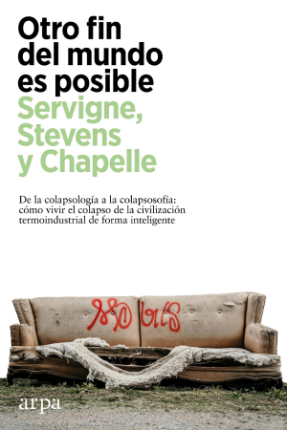
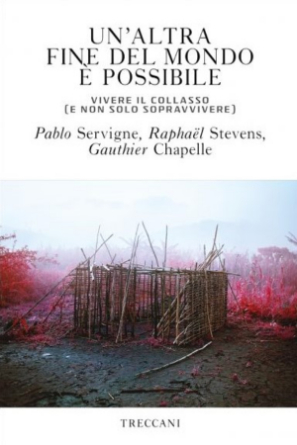
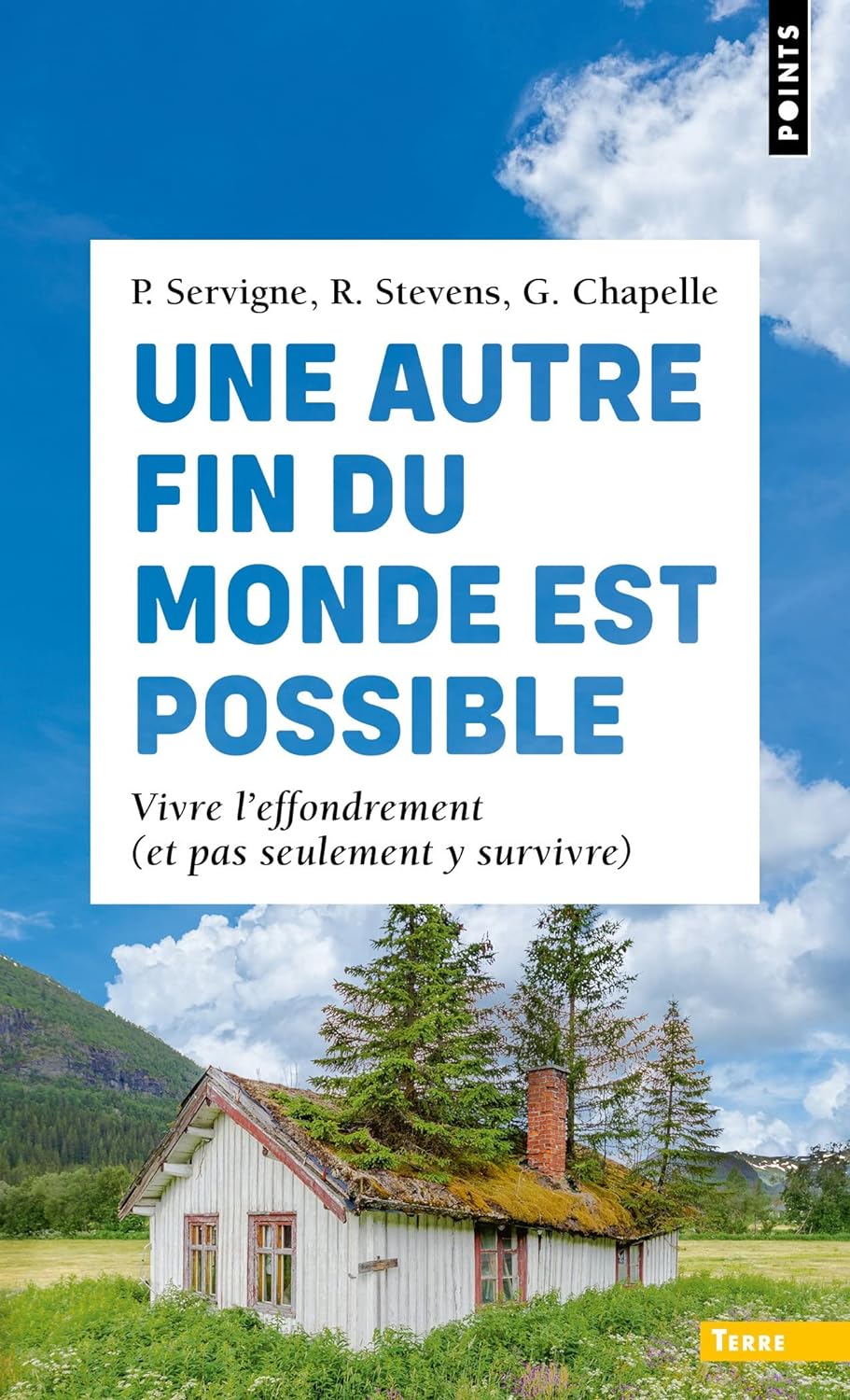
Another End of the World is Possible, 2018 (english edition, 2020). Reviews on AMZN.
Aux origines de la catastrophe, 2020. Reviews on AMZN.
Covers










Press
“A salutary work” — Les Echos
“Precious” — Libération
“These collapsologists are very annoying, because they have arguments. […] Hence our friendly advice: whatever you do, don’t open this book!” —Le Canard Enchaîné
“An explosive book that everyone should buy and read as soon as possible” — L’Obs
“Prophetic” — Bookforum
“Fascinating… a refreshing intellectual perspective, even if it doesn’t necessarily ease the fears we read about, see, and feel every day” — TechCrunch
“Let us praise the authors for betting on the implementation of Spinoza’s joyful passions, for resistance against the camp of those who destroy the Earth, its ecosystems, its human and non-human collectives. At a time when mourning the idea of revolution weakens the logic of resistance in a sense, ‘Another End of the World is Possible’ salutarily opposes a counter-fire to nihilism, despite the noted oscillation” — Véronique Bergen, member of the Royal Academy of French Language and Literature of Belgium
“Agnès Sinaï, Raphaël Stevens, Hugo Carton and Pablo Servigne have written a real must-read with this ‘Small Treatise on Local Resilience’ for anyone who doesn’t want to sit idly by in the face of our society’s future challenges” — Lectures
“A remarkable and concise assessment of the current state of the planet, accompanied by incisive and balanced reflection on the prospects of collapse” — Dominique Bourg, Philosopher, Professor Emeritus at the University of Lausanne
“This book, sparkling with intelligence, addresses the essential question of our future with an always appropriate tone. I devoured it while thinking on every page about our children” —Charles Hervé-Gruyer, Author of Permaculture: Healing the Earth, Feeding People (Actes Sud, 2014)
“[…] the worthy successors of Jean-Pierre Dupuy (for enlightened catastrophism) and Hans Jonas (the responsibility principle). This is a book to recommend to all ecologists to help them better enlighten others” — Association of Journalist-Writers for Nature and Ecology
“Is there any matter more important than that dealt with in this book? No. Is there any matter more neglected than this one? No, either” — Yves Cochet, Mathematician, former Minister of the Environment and European Deputy
“This is an important book. The authors avoid apocalyptic fear-mongering, but present compelling arguments showing that our society is increasingly vulnerable to insidious but potentially devastating setbacks—and that, because our world is now so interconnected, any collapse would have global repercussions. It will leave readers deeply anxious about the direction we’re heading. But it deserves a wide audience among all concerned citizens—and, even more so, among those who can influence policy” — Sir Martin Rees, Astronomer Royal and former Master of Trinity College, Cambridge
“It was high time and a reason to rejoice that this realistic and warm guide to societal collapse is now available in English. The sound and complete clarity brought by Pablo Servigne and Raphaël Stevens will hopefully liberate much practical ingenuity in the United States and other countries. Forty years of developing the Work That Reconnects and deep ecology work worldwide has taught me that facing our fears and losses together with open eyes generates solidarity and collective intelligence” — Joanna Macy, Philosopher, co-author of Coming Back to Life: The Updated Guide to The Work That Reconnects
Columns
Magazine Imagine Demain le Monde (2018-2025)
- Entre anthropocentrisme et biocentrisme, n°163, Printemps 2025.
- Entre prudence et urgence, n°162, Automne 2024.
- Entre décroissance et écomodernisme, n°161, Eté 2024.
- Quand les sciences s’intéressent au futur, n°146, sept - oct 2021.
- Déclencher des emballements… positifs, n°145 juillet-août 2021.
- Tous les ingrédients d’une disette alimentaire, n°144, mai-juin 2021.
- Y a-t-il un risque pour la vie sur Terre ?, n°143, mars-avril 2021.
- La transition énergétique grippée par le choc du COVID, n°142, jan-fév 2021.
- A la recherche des origines de la catastrophe, n°141, nov-déc 2020.
- Sociologie des collasponautes, n°140, sept-oct 2020.
- S’armer de confiance, n°139, mai-juin 2020.
- La complexité, par delà les frontières, n°137, nov-dec 2019.
- La collapsologie est-elle un science ?, n°135, sept-oct 2019.
- Rapa Nui n’a pas tout dit, n°134, juillet-août 2019.
- La science post-normale, n°128, juillet-août 2018.
- Comment parler du pire, n°127, mai-juin 2018.
- L’intuition, pour penser les catastrophes, n°126, mars-avril 2018.
Journal Kairos (2015-2018)
- Se remettre (psychologiquement) d’une catastrophe, n°35, juin-juillet/août 2018.
- Climat : des tempêtes d’émotions à venir, n°34, avril-mai 2018.
- Le côté lumineux du désespoir, n°33, janv-fév 2018.
- Nous sommes catastrophistes, mais pas pessimistes ! (ni optimistes d’ailleurs), n°32, nov-déc 2017.
- Quand les catastrophes font perdre la tête, n°31, sept-oct 2017.
- Prendre conscience d’un possible effondrement, n°30, juin-juillet/août 2017.
- L’imaginaire du débranchement, n°29, avril-mai 2017.
- Les leçons de l’effondrement de l’URSS (II) : Démographie, n°28, fév-mars 2017.
- Les leçons de l’effondrement de l’URSS (I) : Biodiversité, n°26, sept-oct 2016.
- Les millionnaires se préparent au pire, n°25, juin-juil-août 2016.
- Démanteler les centrales nucléaires ? Désolé, ça va pas être possible, n°24, avril-mai 2016.
- Les pandémies ne sont jamais loin, n°23, fév-mars 2016.
- Notre monde va-t-il bientôt ressembler à MAD MAX ?, n°22, dec-janv 2016.
- La finitude de notre civilisation : entre limites et frontières, n°21, sept-oct 2015.
Articles
- Understanding energy system dynamics in a changing climate: Insights for first responders and risk managers, iScience, vol. 28, n°9, 2025, pp. 113320.
- Dernières nouvelles du collapse : revue d’actualité scientifique, Institut Momentum, 2024.
- Warum man sich mit dem Zusammenbruch auseinandersetzen muss, agora 42, janv 2023.
- Reasons for anticipating societal collapse, in Deep Adaptation: Navigating the Realities of Climate Chaos, Eds. Rupert Read & Jem Bendell, Polity Press, 2021, pp. 87‑101.
- Préface et postface inédites pour l’édition poche de Comment tout peut s’effondrer, Seuil, 2021.
- How Everything Can Collapse: Excerpt, Resilience.org, 2020.
- Deep Adaptation opens up a necessary conversation about the breakdown of civilisation, openDemocracy, 2020.
- The overview effect, catalogue de l’exposition (Tendencies ‘19, 26 avril - 9 juin 2019), Bruxelles, 2019.
- Vivre l’effondrement (et pas seulement y survivre, Institut Momentum, 2018.
- Préface pour Renaud Duterme, De quoi l’effondrement est-il le nom : La fragmentation du monde, Editions Utopia, 2016.
- Les inégalités, un facteur d’effondrement, Etopia, 2014.
- Alors, ca vient ? Pourquoi la transition se fait attendre, Barricade, 2014.
- Faut-il sauver le concept de résilience ?, Institut Momentum, 2013.
- Résilience en temps de catastrophe, Barricade, 2013.
- L’anthropocène, L’ère de l’incertitude, Etopia, Revue d’écologie politique, n°13, 2013.